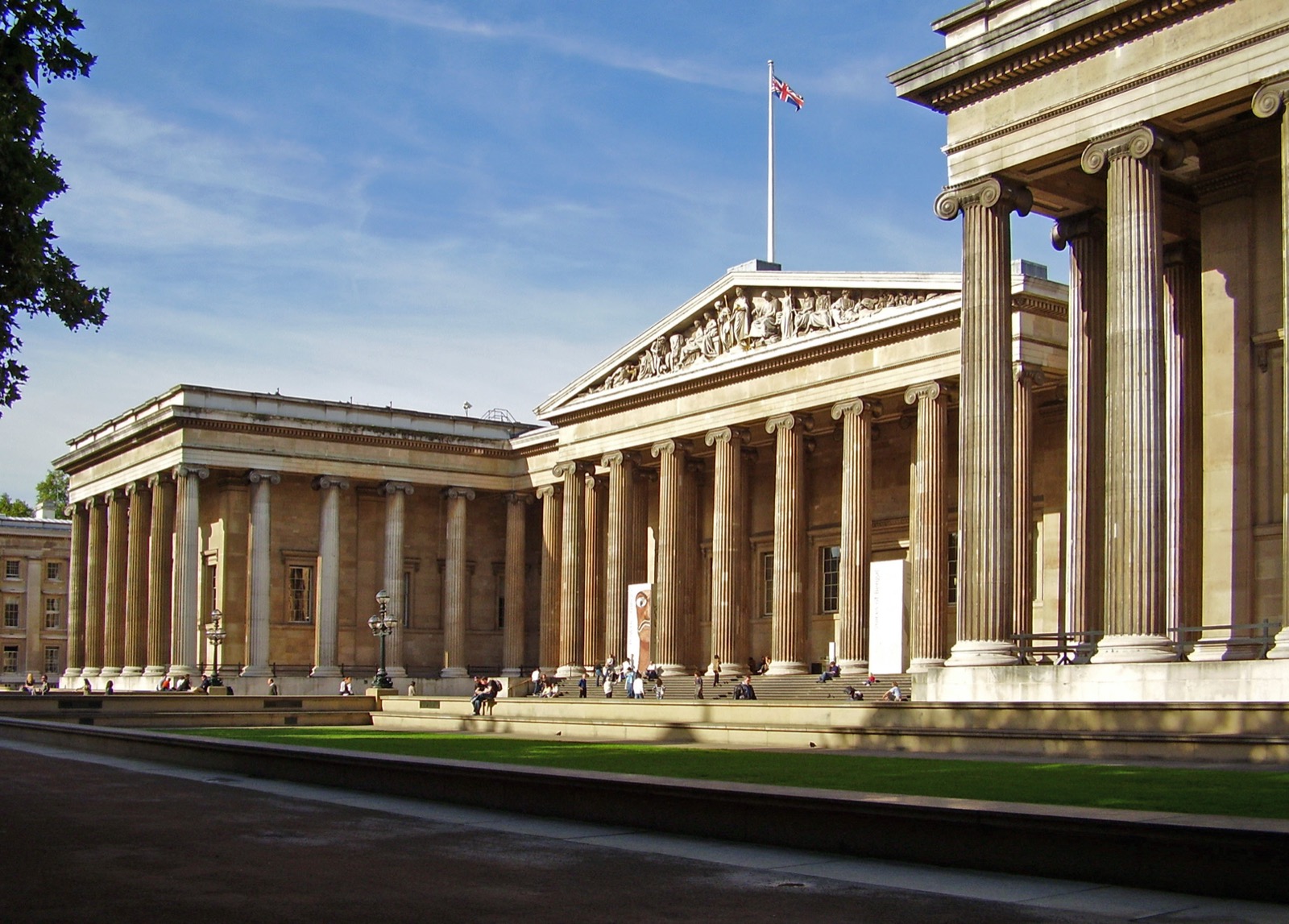
London WC1B 3DG, United Kingdom
| Mon–Sun | 10:00–17:00 |
| Friday | until 20:30 (selected galleries) |
About the museum
The British Museum, founded in 1753, was the first national public museum in the world to cover all fields of knowledge. Its collection of around 8 million objects spans two million years of human history and culture across the globe.
Admission to the permanent collection is free. The great glass-roofed Queen Elizabeth II Great Court, opened in 2000, is the largest covered public square in Europe.
What it is famous for
- The Rosetta Stone — the key to deciphering Egyptian hieroglyphs.
- The Parthenon (Elgin) Marbles.
- Ancient Egyptian mummies and the Egyptian sculpture gallery.
- The Assyrian reliefs and the Sutton Hoo treasures.
- One of the world's great encyclopaedic collections.
Good to know
Entry to the permanent galleries is free (special exhibitions are ticketed). The museum is large and central in Bloomsbury; the nearest Underground stations are Tottenham Court Road, Holborn and Russell Square. Some objects, such as the Parthenon Marbles, are the subject of ongoing repatriation debates between the United Kingdom and the countries of origin.